Chemical Peels in Islamabad: 3 Clinical Peels | Dr Lubna
Stubborn dark spots, chronic acne scars, and dull surface skin can diminish your daily confidence. Consequently, scheduling professional chemical peels in islamabad has become one of the most effective non-surgical ways to reset your complexion. Clients commuting from neighboring sectors like E-11, F-11, and DHA regularly visit our clinic for clinical resurfacing.
At Dr. Lubna Zahir Aesthetic Clinic & Salon in F-10/4 Markaz, we prioritize clinical precision, patient comfort, and dermatological safety. Our medical team formulates customized acid exfoliants to address deep sun damage and hormonal pigmentation safely. Therefore, you can shed damaged surface layers, fade uneven pigment, and reveal a vibrant glow with minimal social downtime.
The Dermatological Science of Keratolysis and Acid Resurfacing
To appreciate how chemical exfoliation transforms skin, we must analyze the biological process of cellular renewal. The outermost layer of human skin is the stratum corneum. This protective layer consists of flattened dead skin cells called corneocytes.
Protein structures called desmosomes tightly bind these dead skin cells together. Over time, sun damage, pollution, and natural aging slow down your cellular turnover. Consequently, dead cells accumulate on the surface, making your face look dull, rough, and congested.
A medical application of chemical peels in islamabad initiates a controlled biological process called keratolysis. The applied acid solution breaks the chemical bonds holding dead surface cells together. As a result, old, damaged cells shed away smoothly over several days.
Furthermore, chemical resurfacing intentionally causes a predictable, microscopic injury to the tissue. According to clinical studies published on Healthwire’s verified dermatology platform, this controlled trauma triggers rapid basal cell mitosis. In addition, the deeper acid penetration stimulates fibroblasts to synthesize fresh Type I and Type III collagen.
Therefore, chemical resurfacing does not merely scrub the surface. Instead, it reprograms your skin architecture to regenerate thicker, healthier, and clearer dermal tissue.
3 Clinical Peels Categorized by Penetration Depth
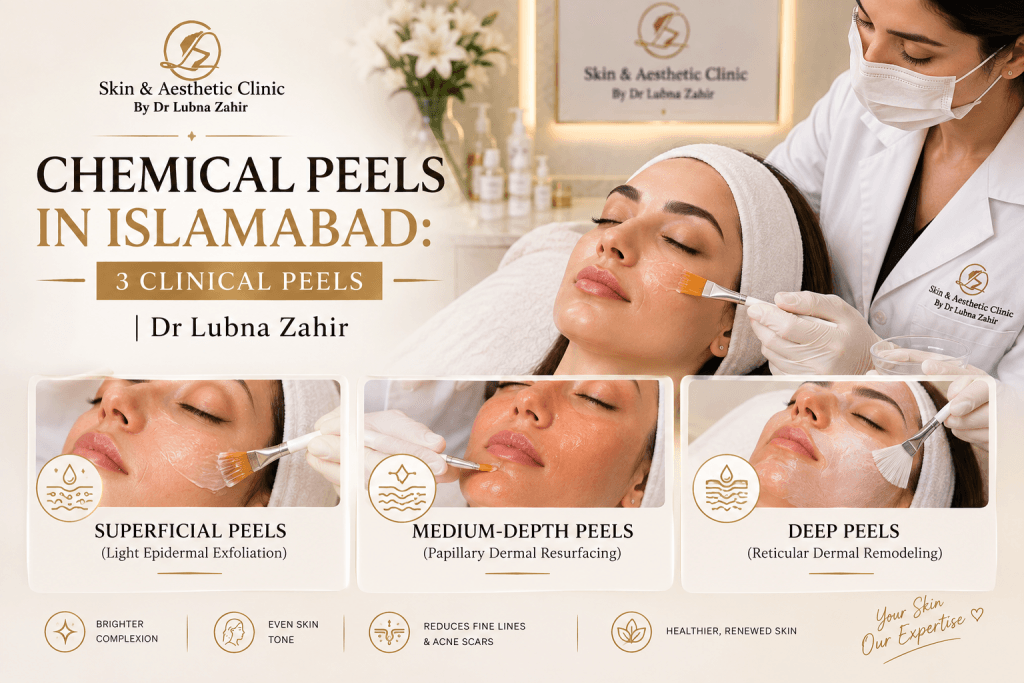
Every skin condition requires a specific depth of tissue penetration. At Dr. Lubna Zahir’s clinic, we categorize our treatments into three clinical peel depths:
1. Superficial Peels (Light Epidermal Exfoliation)
Superficial peels target only the upper epidermal layers. We utilize gentle Alpha-Hydroxy Acids (AHAs) such as glycolic acid and lactic acid, as well as Beta-Hydroxy Acids (BHAs) like salicylic acid.
These mild acids dissolve superficial dead skin cells and clear trapped oil inside congested pores. Consequently, superficial peels brighten mild dullness, refine texture, and refresh tired complexions. Furthermore, they involve zero social downtime, making them a popular choice before social events.
2. Medium-Depth Peels (Papillary Dermal Resurfacing)
Medium peels penetrate entirely through the epidermis to reach the upper papillary dermis. Our specialists primarily deploy Trichloroacetic Acid (TCA) in concentrations ranging from 15% to 35%, often combined with Jessner’s solution.
As a result, medium peels break down stubborn dermal melanin deposits and soften moderate facial wrinkles. Patients experience noticeable peeling for three to five days. Therefore, this depth works exceptionally well for resistant melasma, sun spots, and shallow acne scars.
3. Deep Peels (Reticular Dermal Remodeling)
Deep peels reach the lower reticular dermis to achieve significant structural remodeling. These potent treatments use concentrated formulations to address severe photoaging and deep ice-pick scars.
However, deep peeling requires prolonged recovery and intensive post-care. In South Asian skin types (Fitzpatrick Scales III to V), deep phenol peels carry high risks of hypopigmentation. Consequently, our clinic utilizes modified medium-depth combination peels to achieve remarkable remodeling without unnecessary pigmentation risks.
Comprehensive Acid Formulation & Ingredient Matrix
To choose the best treatment for your skin goals, review our detailed formulation matrix below:
| Acid Class & Name | Molecular Size | Target Tissue Depth | Primary Dermatological Indication | Post-Treatment Peeling Profile |
| Glycolic Acid (AHA) | Smallest AHA molecule (2 carbon atoms) | Superficial stratum corneum & basal layer | Dullness, early fine lines, and uneven skin tone | Light, powdery flaking for 2 to 3 days |
| Salicylic Acid (BHA) | Lipophilic (oil-soluble) molecule | Deep inside sebaceous follicular canals | Active cystic acne, blackheads, and oily congestion | Mild localized dryness for 48 hours |
| Lactic Acid (AHA) | Large, hydrating milk-derived molecule | Gentle superficial epidermal exfoliation | Sensitive skin, dehydration, and mild dryness | Virtually invisible micro-flaking |
| Mandelic Acid (AHA) | Large bitter almond molecule (slow uptake) | Superficial epidermis with zero irritation | Hyperpigmentation in dark, sensitive skin | Zero social downtime; immediate glow |
| Trichloroacetic Acid (TCA) | Potent self-neutralizing crystal agent | Papillary dermis (up to 2.0 mm deep) | Stubborn melasma, textural acne scars, and wrinkles | Sheet-like peeling for 5 to 7 days |
| Jessner’s Solution | Blend: Salicylic + Lactic + Resorcinol | Mid-to-deep epidermal junction | Severe post-acne pigmentation and oily congestion | Moderate flaking lasting 4 to 6 days |
| Yellow Peel (Retinol-Based) | Pure Retinol + Phytic + Kojic Acid | Epidermal and superficial dermal renewal | Melasma, active hormonal spots, and aging skin | Uniform golden flaking for 3 to 4 days |
For detailed guidance on cosmetic dermatological ingredients, review Marham’s verified aesthetic network.
Major Skin Concerns Managed by Chemical Peels in Islamabad
At Dr. Lubna Zahir Aesthetic Clinic & Salon, we customize each peeling session to resolve specific dermatological conditions:
+-------------------------------------------------------------------+
|               PRIMARY CLINICAL PEELING INDICATIONS                |
+-------------------------------------------------------------------+
| 1. Melasma & Chhaiyan           --> Suppresses deep dermal pigment |
| 2. Post-Acne Scars & Marks      --> Leveling of atrophic tissue   |
| 3. Active Acne & Excess Sebum   --> Purges bacterial pore colonies|
| 4. Sun Damage & Solar Elastosis --> Sheds UV-damaged keratinocytes|
| 5. Enlarged Pores & Congestion  --> Contracts follicular walls    |
+-------------------------------------------------------------------+
1. Stubborn Melasma and Hormonal Hyperpigmentation
Melasma (chhaiyan) remains a persistent challenge across Pakistan due to intense summer UV radiation and hormonal changes. Melanin-loaded keratinocytes sit trapped deep within the epidermal layers.
Targeted sessions of chemical peels in islamabad dissolve these pigmented cells systematically. In addition, we incorporate tyrosinase inhibitors like kojic acid and tranexamic acid into our peel protocols. Consequently, we suppress new melanin synthesis while clearing existing dark patches.
2. Atrophic Acne Scars and Dark Post-Inflammatory Marks
Inflammatory acne breakouts frequently leave behind dark red or brown marks (PIH). In more severe cases, acne damages the underlying collagen matrix, creating pitted scars.
Our specialized TCA Cross and Jessner’s peels stimulate rapid collagen bridging across scarred margins. Over successive treatments, depressed scars fill in and skin texture smooths out noticeably. For deep boxcar scarring, we frequently combine peels with Microneedling or Subcision Treatment.
3. Active Inflammatory Acne and Congested Pores
Excess sebum production traps dead skin cells inside pores, feeding acne-causing bacteria. Salicylic acid is lipophilic, meaning it easily dissolves in natural skin oils.
Therefore, it penetrates directly into congested sebaceous glands, unclogging pores and calming active inflammation. Furthermore, regular light peels reduce overall oiliness, preventing future breakouts across the T-zone.
4. Solar Elastosis and Premature Fine Lines
Chronic sun exposure from the intense Margalla climate breaks down dermal elastic fibers. As a result, the skin develops fine, crepey creasing and coarse texture.
Medium-depth glycolic and TCA peels induce thermal and chemical remodeling across the papillary dermis. This reaction triggers rapid neocollagenesis, tightening fine lines and restoring skin elasticity. Consequently, your face looks naturally refreshed without looking tight or artificial.
Candidacy Evaluation: Are Chemical Peels Safe for Your Skin?
Safety is essential when applying chemical acids to melanin-rich South Asian complexions. Without proper evaluation, aggressive peeling can trigger post-inflammatory hyperpigmentation.
Our clinical team assesses your skin phototype and barrier health before recommending a peel protocol:
+-------------------------------------------------------------------+
|                  CANDIDACY QUALIFICATION CHECKLIST                |
+-------------------------------------------------------------------+
| [✓] Uneven skin tone, sun spots, melasma, or post-acne marks     |
| [✓] Enlarged facial pores, persistent blackheads, or oily skin    |
| [✓] Mild to moderate fine lines, rough skin, or sun damage        |
| [✓] Willingness to apply broad-spectrum SPF 50+ daily             |
| [X] Active viral infections like cold sores (Herpes Simplex)      |
| [X] Open wounds, severe active eczema, or broken skin barriers    |
| [X] Oral isotretinoin (Roaccutane) use within the past 6 months   |
| [X] History of keloid or hypertrophic scar formation              |
| [X] Active pregnancy or lactation (for specific strong acids)     |
+-------------------------------------------------------------------+
Safety on South Asian Complexions (Fitzpatrick Scales III – V)
Darker skin tones produce more reactive melanin. If an inexperienced technician applies an overly aggressive acid, the melanocytes react by depositing dark pigment.
At Dr. Lubna Zahir’s clinic, we use buffered acid formulations and gentle priming protocols. Furthermore, we utilize larger-molecule acids like mandelic acid, which penetrate slowly and evenly. As a result, our patients achieve brilliant skin clarity without pigment rebound. You can review verified clinical safety guidelines on Oladoc’s healthcare directory.
What to Expect During Your In-Clinic Treatment in F-10 Markaz
We maintain strict clinical hygiene and safety standards throughout every step of your appointment:
+-------------------+      +-------------------+      +-------------------+      +-------------------+
| STEP 1:           |      | STEP 2:           |      | STEP 3:           |      | STEP 4:           |
| Skin Diagnostics  | ---> | Degreasing &      | ---> | Controlled Acid   | ---> | Neutralization &  |
| & Formulation     |      | Barrier Prep      |      | Application       |      | Calming Post-Care |
+-------------------+      +-------------------+      +-------------------+      +-------------------+
Step 1: Dermatological Skin Diagnostics
First, Dr. Lubna Zahir analyzes your skin under a medical Woods lamp. We identify whether your pigment sits in the superficial epidermis or deep dermis. Subsequently, we select the exact acid percentage and pH balance for your session.
Step 2: Thorough Cleansing and Degreasing
Next, our aesthetician cleanses your face with an antiseptic solution. We apply a medical degreasing prep solution (usually alcohol or acetone-based) to remove all surface oils.
This degreasing step ensures the chemical solution penetrates evenly across the entire face. In addition, we apply a protective petroleum barrier around sensitive zones, including the corners of your eyes, nostrils, and lips.
Step 3: Controlled Chemical Application
Using a sterile medical fan brush or cotton applicator, our specialist applies the acid solution evenly. You may experience a mild warming or tingling sensation as the acid activates.
We time the application carefully. In addition, our doctors monitor your skin closely for erythema (redness) or uniform frosting (protein coagulation).
Step 4: Neutralization and Calming Care
Once we achieve the desired depth, we apply a soothing alkaline neutralizing solution to halt the chemical reaction. For self-neutralizing peels like TCA, we allow the product to settle naturally.
Finally, we apply a soothing post-procedure peptide balm and broad-spectrum mineral sunscreen. The entire appointment takes approximately 30 to 45 minutes.
Day-by-Day Post-Peel Recovery and Healing Timeline
Understanding your skin’s biological healing stages helps you care for your complexion properly at home:
| Healing Timeframe | Biological Skin Response | Visible Physical Appearance | Mandatory Home Care Protocol |
| Hours 0 – 24 | Acid completes cellular detachment; surface skin tightens | Mild pinkness; skin feels firm, warm, and taut | Do not wash face for 6 hours; avoid hot water and exercise |
| Days 2 – 3 | Dead cellular layers oxidize and prepare to detach | Complexion may look slightly darker; skin feels dry | Apply prescribed barrier cream; avoid touching your face |
| Days 4 – 7 | Desquamation phase: dead skin sheds from the center outward | Noticeable flaking or sheet-like peeling begins | Never pick, pull, or scrub peeling skin; moisturize often |
| Days 8 – 10 | Fresh epidermal re-epithelialization is complete | Peeling stops; skin looks radiant, bright, and smooth | Resume gentle skincare; apply mineral SPF 50+ daily |
| Weeks 3 – 4 | Fibroblasts produce fresh Type I and Type III collagen | Pores look smaller; dark spots fade; scars soften | Attend your scheduled follow-up session at our clinic |
Essential Aftercare Guidelines: What to Do and Avoid
Strict adherence to aftercare instructions ensures safe healing and prevents unwanted pigmentation:
Essential Best Practices:
-
Apply Broad-Spectrum Sunscreen Diligently: Freshly exfoliated skin is extremely sensitive to UV rays. Apply a broad-spectrum mineral SPF 50+ every three hours.
-
Moisturize Frequently: Use fragrance-free barrier repair creams containing ceramides, hyaluronic acid, and panthenol to support tissue healing.
-
Wash with Cool Water: Cleanse your face with cool or lukewarm water and a soap-free, non-foaming cleanser.
-
Stay Well Hydrated: Drink plenty of water throughout the day to support cellular regeneration.
Critical Mistakes to Avoid:
-
Never Pick or Peel Flaking Skin: Pulling off peeling skin before it detaches naturally tears living tissue. Consequently, this causes scarring and dark post-inflammatory marks.
-
Avoid Direct Heat and Heavy Sweating: Do not use saunas, steam rooms, or participate in intense workouts for 48 hours. Excessive sweat stings raw skin.
-
Pause Active Skincare Products: Stop using retinoids, Vitamin C serums, and exfoliating scrubs for seven days post-peel.
-
Avoid Facial Waxing or Threading: Do not wax, thread, or use depilatory creams on the face for at least two weeks.
Synergistic Aesthetic Combinations at Dr. Lubna Zahir’s Clinic
Combining chemical exfoliation with complementary clinical treatments delivers comprehensive facial rejuvenation:
+-------------------------------------------------------------------+
|               SYNERGISTIC CLINICAL COMBINATIONS                   |
+-------------------------------------------------------------------+
| 1. Peels + HydraFacial Glow      --> Deep pore purge & nourishment |
| 2. Peels + Q-Switch Laser Toning --> Double-action melasma clearance|
| 3. Peels + Microneedling Therapy --> Deep acne scar remodeling     |
| 4. Peels + Meso-Infusions        --> Transdermal vitamin delivery  |
+-------------------------------------------------------------------+
1. Chemical Peels + HydraFacial Therapy
Undergoing an authentic HydraFacial two weeks after a chemical peel helps clear remaining flaking skin. In addition, the vortex suction infuses antioxidants and hyaluronic acid deep into the freshly revealed skin layers.
2. Peels + Q-Switch Laser Resurfacing
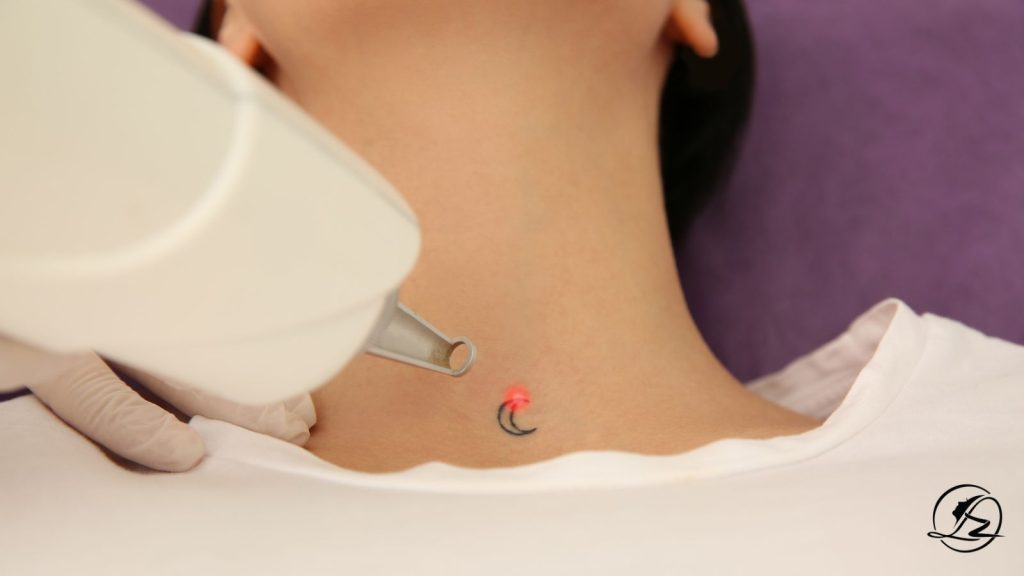
For deep, stubborn melasma, combining surface chemical exfoliation with our Q-Switch Laser delivers outstanding results. The laser shatters deep dermal pigment clusters, while the chemical peel exfoliates surface melanin.
3. Peels + Microneedling Scar Remodeling
Alternating chemical peels with Microneedling addresses both texture and tone. Peels smooth superficial post-acne marks, while automated micro-needles stimulate collagen to fill in deep atrophic scars.
4. Peels + Mesotherapy Nutrient Infusions
Applying tailored [Mesotherapy] infusions following light exfoliation enhances cellular absorption. We deliver glutathione, Vitamin C, and peptides straight to your active skin cells.
Reveal Your Radiant, Clear Complexion in Islamabad Today
Stop hiding behind heavy cosmetic concealers and thick foundation. Experience the transformative power of medically formulated chemical peels in islamabad customized by experienced dermatological specialists.
Clear stubborn melasma, fade acne marks, and restore a naturally glowing complexion today. Click Here to Message Us Directly on WhatsApp at 03330300223 or visit our clinic at Sarran Plaza, Sagheer Market, Street 40, F-10/4, Islamabad to schedule your personalized skin consultation.
FAQ’s:
How much do chemical peels cost in Islamabad?
At Dr. Lubna Zahir’s F-10 clinic, superficial chemical peels start from PKR 8,000 per session. Specialized medium-depth TCA and Yellow peels range from PKR 14,000 to PKR 22,000. We also offer comprehensive four-session packages for persistent melasma.
Do chemical peels hurt during application?
No, chemical peels are very well tolerated. Patients usually feel a mild tingling, prickling, or warming sensation for three to five minutes while the solution activates. We use cooling fans and neutralizing solutions to keep you completely comfortable.
How many chemical peel sessions will I need?
Most patients see visible brightening after a single peel. However, clearing deep melasma or acne scars typically requires a series of three to six sessions spaced three to four weeks apart to achieve optimal results.
Will my skin peel off in visible sheets?
Visible peeling depends on the depth of the peel. Superficial fruit acid peels cause only mild, invisible flaking. Medium-depth TCA peels create moderate peeling for three to five days as old damaged skin sheds away.